Leak Detection Specialists
Leak Detection Tampa FL
Water, pool, slab, underground, and hidden leak detection throughout Tampa and the surrounding area.
Find the leak. Find it accurately. Fix the problem before the damage gets worse.
Prefer email? Write to service@leakdetectiontampa.com
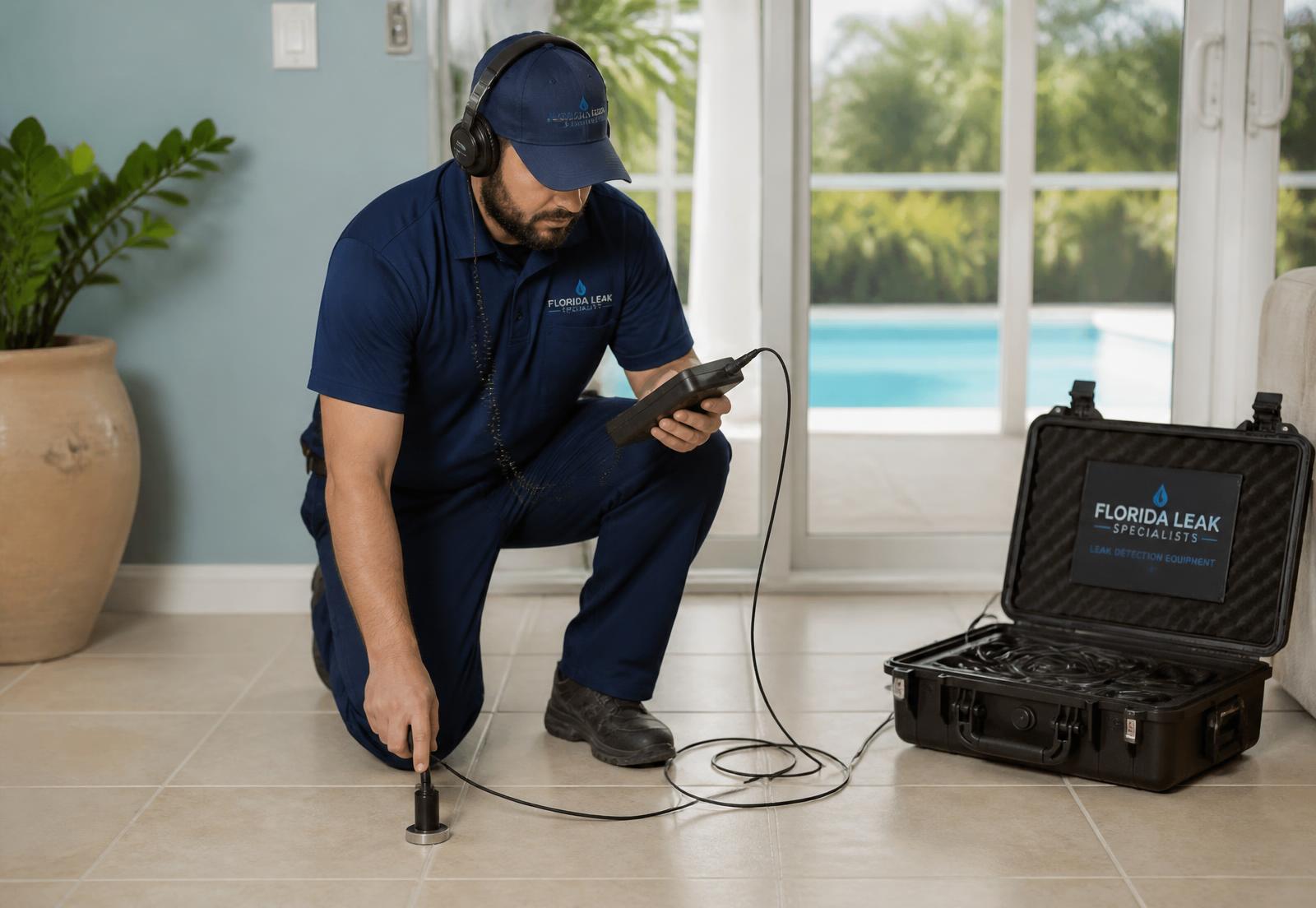
Non-Invasive Leak Detection
Location work is done from the surface first, so any access is opened deliberately.
Specialized Diagnostic Equipment
Acoustic listening, moisture mapping, thermal scanning and pressure isolation.
Accurate Leak Location
A mark is placed only when two independent readings agree on the same spot.
Residential & Commercial
Homes, condos, multi-tenant buildings and commercial properties across Tampa.
What Leak Detection Actually Is
A leak becomes a detection problem when the water you see is not where the water is coming from. Pressurized water follows the path of least resistance — along a pipe trench, across a vapor barrier, under a tile bed, down a stud cavity — and surfaces wherever it finds an opening. That can be several rooms or feet away from the actual failure.
Leak detection is the process of locating the source of water loss when the origin is not obvious. It is a diagnostic discipline: it proves water is being lost, identifies which system is losing it, and narrows the location before any walls, floors, slabs, landscaping, or other areas are opened. Detection is not the same as repair. The goal is an accurate location and a clear explanation, so any repair that follows is targeted rather than exploratory.
Services
Leak Detection Services in Tampa
Specialized leak detection for the scenarios that most commonly hide water loss in Tampa homes, pools, and commercial properties. Each service page explains the symptoms, the likely causes, and how that specific type of leak is located.
Water Leak Detection
The core discipline: locating pressurized water loss on supply lines, service lines and fixtures.
Learn morePool Leak Detection
Separating evaporation from genuine water loss, then locating it in the shell, plumbing or equipment.
Learn moreSlab Leak Detection
Locating leaks in supply lines under concrete foundations — the most common hidden-leak scenario in Tampa homes.
Learn moreUnderground Leak Detection
Buried service lines, irrigation piping and yard leaks that never surface obviously.
Learn moreHidden Leak Detection
For water loss with no visible source: tracing concealed leaks behind finishes and under floors.
Learn moreCommercial Leak Detection
Offices, retail, restaurants, warehouses and multi-tenant properties.
Learn more
Methods & technology
How We Locate Hidden Leaks
Specialized leak detection relies on multiple independent methods because no single reading proves a leak on its own. Acoustic listening, electronic location, thermal and infrared imaging, pressure testing, and moisture mapping each answer a different question — and each has real limits. Findings are corroborated rather than taken from a single reading.
Electronic Leak Detection
Amplified listening and electronic locating instruments used to sense leaks through material.
Learn moreAcoustic Leak Detection
Listening for the turbulence a pressurized leak creates, then walking the sound to its peak.
Learn moreThermal Imaging Leak Detection
Reading surface temperature patterns to reveal where moisture sits behind a finish.
Learn moreInfrared Leak Detection
Fast, wide-area scanning that shows where to investigate closely.
Learn morePressure Testing
Isolation testing that proves which line is losing water before location work begins.
Learn moreNon-Invasive Leak Detection
Locating the leak from the surface first, so any access made is small and purposeful.
Learn more
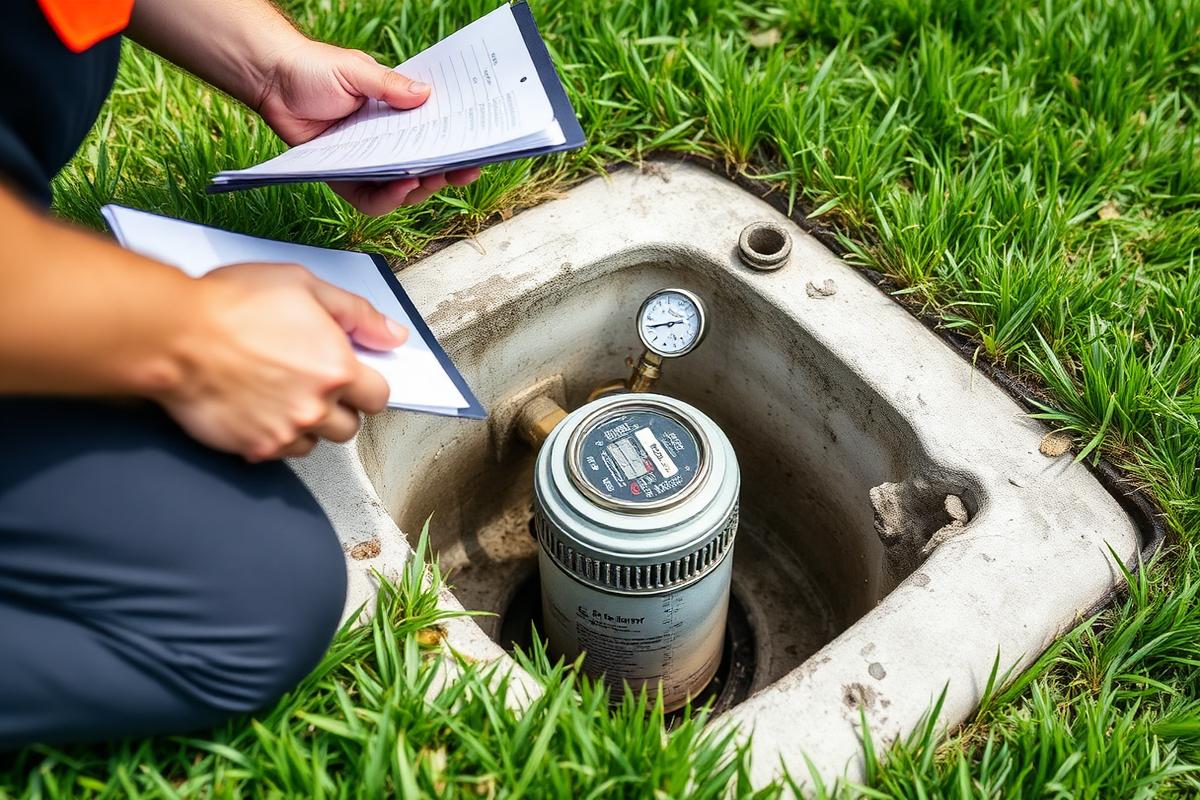
Signs You May Have a Hidden Water Leak
Most calls start with a symptom rather than a diagnosis. None of these prove a leak on their own, but each is worth investigating rather than waiting on.
- A water bill that rises without a change in household use
- A water meter dial or leak indicator that keeps moving with every fixture off
- Warm or unusually hot spots on a tile or concrete floor
- The sound of running water when nothing is in use
- A wet, spongy or unusually green patch in the yard during dry weather
- Stains, bubbling paint, or soft drywall at the base of a wall or on a ceiling
- A persistent musty odor in one part of the house
- Water pressure that has dropped noticeably at multiple fixtures
- A pool or spa losing more water than evaporation would explain
Signs of a Hidden Water Leak
The early signals worth acting on, ranked by how reliably they indicate a real leak.
Learn moreHigh Water Bill, No Visible Leak
How to work backwards from an unexplained bill increase to the system responsible.
Learn moreWater Meter Running With Water Off
The clearest evidence of a leak there is — and how to narrow it in two steps.
Learn moreWet Spot in the Yard
Soggy lawn during dry weather: irrigation, service line, drainage or something else.
Learn moreWater Leak in a Wall
Reading the evidence on a wall and confirming the source before cutting into it.
Learn moreWater Leak in a Ceiling
Plumbing, condensate or roof? Timing usually answers it before any equipment does.
Learn more
The appointment
How the Leak Detection Process Works
What actually happens on site, from the first question through the marked location.
From First Question to Marked Location
- 1
Describe the symptoms and problem
What changed, when it started, which fixtures are involved, and what has already been repaired. This alone often eliminates entire systems.
- 2
Determine what system or area may be involved
Reading the meter with fixtures off, then isolating sections of the system to prove whether the loss is inside, outside, or on an irrigation or pool line.
- 3
Perform appropriate diagnostic testing
Moisture mapping, acoustic listening, thermal scanning and pressure testing across the suspect area to narrow the search from a room to a few square feet.
- 4
Narrow down the leak location
Correlating readings from more than one method before marking a location, because a single indication can be misleading on tile, pavers or saturated soil.
- 5
Verify the finding when appropriate
Pressure isolation or a second independent reading confirms that the suspected section is the one losing water.
- 6
Explain what was found
A clear explanation of what was located, what remains uncertain, and what access would be required to reach it.
- 7
Explain what should happen next
Detection identifies where the leak is; repair is a separate scope. We outline what the next step would involve so you can make an informed decision.
Residential & Commercial Leak Detection in Tampa
Leak-location needs differ between residential and commercial properties because layouts, plumbing systems, access, and affected areas can vary.
Residential Leak Detection
On homes, condos and townhomes, the most common investigations are slab lines under single-story houses, wall leaks behind showers and laundry boxes, irrigation and service-line losses in the yard, and pool water loss.
Because the family is living in the space, the plan usually prioritizes keeping finished flooring and cabinetry intact and confirming the location twice before anything is opened.
Commercial Leak Detection
On commercial properties the same physics apply, but access and disruption dominate the plan: occupied tenant spaces, finished ceilings, long horizontal runs, and systems that cannot simply be shut down during business hours.
Isolation testing carries more weight here, because proving which riser or which tenant line is losing water avoids surveying an entire building.
Leak Detection Cost in Tampa
Detection pricing tracks scope. The main variables are how much of the system has to be isolated, the surface being surveyed, and whether irrigation, a pool, or a second structure is part of the water loss.
- Accessibility of the suspected area and pipe route
- Exposed versus concealed plumbing
- Slab or underground location
- Pool versus plumbing leak
- Number of areas requiring testing
- Complexity of the diagnostic process
- Verification and documentation requirements
Tampa & Tampa Bay
Leak Detection Across Tampa & Tampa Bay
Housing stock varies enormously across this market, and so do the failure patterns. Each area page covers what is actually different about the properties there.
- TampaThe full city: older bungalows, mid-century slab ranches and newer subdivisions.
- South TampaOlder bungalows and renovated homes next door to new infill construction.
- CarrollwoodEstablished slab-built homes, decades-old piping and heavy irrigation.
- WestchaseSlab homes plus villas and townhomes where shared walls complicate diagnosis.
- Town 'N' CountrySingle-story slab homes from the era of under-slab copper routing.
- Temple TerraceLong-established homes with mixed plumbing eras and mature landscaping.
- BrandonLarger suburban lots, long buried runs and extensive irrigation.
- RiverviewNewer construction where fittings and connections fail before pipe does.
- LutzLarger lots, some well systems, and extensive irrigation to isolate.
Tampa Leak Detection FAQs
- Can you find a leak without breaking walls?
- In most cases the location work itself is non-invasive — acoustic listening, moisture mapping, thermal scanning and pressure isolation are all done from the surface. Access is only opened once a location has been established, and only where it is needed.
- How long does leak detection take?
- It depends on how much of the system has to be isolated and how accessible the area is. A single suspected fixture is a much shorter investigation than a whole-property water-loss review that includes irrigation and a pool.
- Do I need detection if I cannot see any water?
- Often yes. Meter movement, higher bills, pressure loss and musty odors regularly appear before any visible water does, and those are the easiest leaks to resolve because the damage is still limited.
- Is leak detection the same as leak repair?
- No. Detection is the diagnostic step: proving water is being lost and locating where. Repair is a separate scope that depends on the pipe, the material and the access required to reach it.
- Can a leak exist without the water meter moving?
- Yes. Drain, waste and vent leaks, pool shell losses and roof-related intrusion will not register at the meter, because that water is not pressurized supply water.
- What does leak detection cost in Tampa?
- Pricing depends on how much of the system has to be isolated, the surface being surveyed and whether irrigation or a pool is involved. The leak detection cost page explains what changes the scope, and we can give you an expectation once you describe the situation.
Describe what you're seeing and we'll tell you how we'd approach it
Call (656) 259-3669 or email service@leakdetectiontampa.com with the details and we can explain which tests would apply to your property.